N m’a faamu. Boosting Learning without Dividing: Evidence from a Bilingual Education Reform in Mali

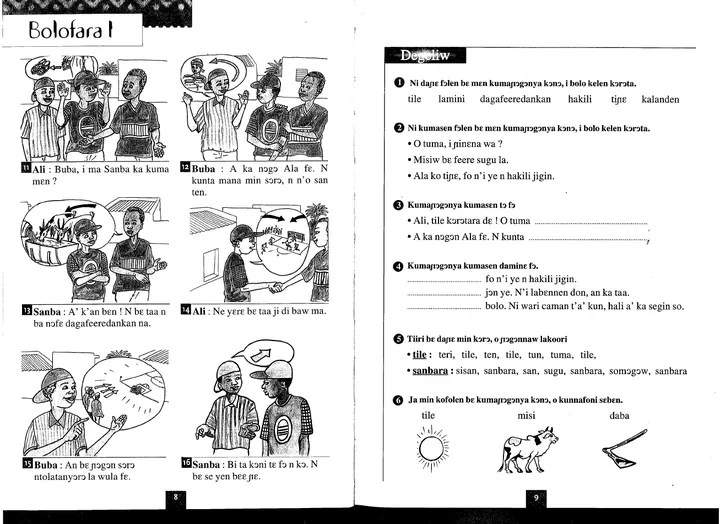 Texbook in Bamanankan.
Abstract
Despite promising evidence on the benefits of multilingual education in Sub-Saharan countries, its expansion suffers from a lack of evidence on linguistic transfer from the first language to the second language and a persistent belief that it will boost ethnic identity. This study evaluates the long-term impacts of Mali’s 1999 national bilingual education reform, which introduced 11 local languages into the primary school curriculum as languages of instruction. Exploiting spatial variation in policy implementation and using a difference-in-differences approach with commune-level data, the study finds that exposure to bilingual education significantly improves local language literacy by 30% and French literacy by 10%. These gains are especially pronounced among women. Contrary to concerns over national cohesion, the policy does not exacerbate ethnic tensions and even increases trust in the national institutions. The findings contribute to the literature on large-scale bilingual education and the political economy of language use in Africa, suggesting that integrating local languages into education systems can enhance human capital without undermining nation-building.
Type
Publication
Working Paper